A Single Term Life Application Had Three Different Nicotine Test Results

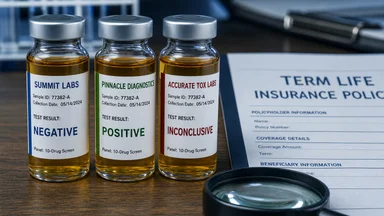
A 42-year-old non-smoker applied for a US$250,000 term life policy in early 2024. The paramedical exam included a blood draw for cotinine, the primary metabolite of nicotine. Lab A reported a positive result at 15 ng/mL, above the carrier's 10 ng/mL threshold. The applicant insisted she had never used tobacco. The underwriter ordered a retest. Lab B returned a negative result at 3 ng/mL. A third sample, sent to Lab C, came back borderline at 11 ng/mL. Three tests, three outcomes, one applicant. Within 48 hours, the file landed on the desk of the carrier's Special Investigations Unit.
The Case That Opened a File Drawer
The inconsistency alone warranted a closer look. For a US$250,000 term life policy, the difference between a tobacco-user rating and a non-tobacco rating can mean roughly 50% higher premium. Over the life of the policy, that adds up. The SIU investigator assigned to the case began by interviewing the applicant, reviewing the paramedical exam records, and tracing the chain of custody for each specimen.
The applicant, a married mother of two, had never smoked cigarettes, used vaping products, or consumed nicotine gum or patches. Her medical records showed no diagnosis of nicotine dependence and no mention of tobacco use in any physician notes. She did report occasional exposure to secondhand smoke at a part-time job in a bar, but that exposure was intermittent and not heavy.
The three labs used different testing methodologies. Lab A used a serum cotinine immunoassay with a cutoff of 10 ng/mL. Lab B used a urine cotinine test with a cutoff of 50 ng/mL. Lab C used an oral fluid test with a cutoff of 5 ng/mL. The lack of standardisation across labs and specimen types is a known issue in the industry. Each test measures cotinine differently, and the half-life of cotinine in the body is roughly 16 hours, meaning timing of the sample matters enormously.
The SIU investigator also discovered that the paramedical company that collected the samples had been the subject of prior complaints regarding labeling errors. In one previous case, two vials from different applicants had been swapped, leading to a false positive for a non-smoker. The company had since updated its procedures, but the investigator noted that no barcode tracking system was in place at the collection site at the time of this applicant's exam.
How Cotinine Testing Works—and Fails
Cotinine is the gold-standard biomarker for nicotine exposure because it remains detectable longer than nicotine itself. But the accuracy of the test depends on the specimen type, the cutoff level used, and the laboratory's quality controls. Serum tests are considered highly specific but can produce false positives from certain medications or dietary sources. Urine tests have a longer detection window but are more prone to contamination. Oral fluid tests are convenient but less sensitive.
There is no national standard for cotinine cutoff levels in insurance underwriting. Each carrier sets its own threshold, typically between 10 and 50 ng/mL for serum. This variability means that an applicant who tests at 12 ng/mL on one carrier's test might be classified as a smoker, while another carrier using a 15 ng/mL cutoff would classify them as a non-smoker. The same applicant can get different results from different labs simply due to cutoff differences.
Chain-of-custody gaps are another vulnerability. Paramedical examiners often draw blood and urine in the applicant's home or office, then ship the samples to a central lab. If the samples are not properly labeled, stored, or transported, the risk of mix-ups or degradation increases. Industry studies have estimated that lab error rates for cotinine testing can range from 1% to 5%, depending on the laboratory and the volume of tests processed.
Some carriers have moved to hair or nail testing for long-term nicotine history, as these methods can detect use over months rather than hours. But these tests are more expensive and less commonly used. The cost-benefit analysis for a US$250,000 policy may not justify the additional expense, especially when the prevalence of undisclosed tobacco use among applicants is relatively low.
The Applicant's Story Versus the Lab Slip
The applicant's denial of tobacco use was consistent across multiple interviews. She provided a detailed account of her daily routine, which did not include smoking. She also pointed out that her husband and children were non-smokers, and that her bar job involved serving drinks, not working in a smoky back room. The secondhand smoke exposure she described was minimal—perhaps a few hours a week in a ventilated area.
The Medical Review Officer (MRO) assigned to the case interviewed the applicant by phone. The MRO noted that the applicant's explanation for the positive result—secondhand smoke—was plausible but not fully supported by the cotinine level. Serum cotinine levels from secondhand smoke rarely exceed 5 ng/mL, and typically fall below 2 ng/mL. A level of 15 ng/mL is more consistent with active smoking or heavy, regular secondhand exposure. However, the borderline result of 11 ng/mL from Lab C could be consistent with moderate secondhand exposure.
The SIU investigator requested a fourth test, this time using a hair sample. Hair cotinine testing can detect nicotine exposure over the past three months and is less affected by short-term fluctuations. The hair test came back negative, with cotinine levels well below the threshold for active smoking. This result, combined with the applicant's consistent story and medical records, led the carrier to reclassify her as a non-tobacco user and issue the policy at the standard rate.
The case was closed, but the investigator flagged the paramedical company for further review. The company had used three different phlebotomists for the three exams, and the labeling errors found in the file suggested a systemic problem rather than an isolated mistake. The carrier subsequently audited the paramedical vendor and implemented new barcode tracking requirements.
What the SIU Found in the File
The SIU report documented several red flags. First, the paramedical company had a history of complaints about sloppy labeling, but no corrective action had been taken. Second, the chain-of-custody forms for the three samples were incomplete—one form lacked the phlebotomist's signature, and another had a date that didn't match the collection time. Third, the lab that produced the positive result had a higher-than-average false positive rate in internal audits, though this information was not shared with the carrier at the time of testing.
The investigator also found that the applicant's first sample had been drawn at a different location than the second and third. The first draw was at a mobile exam center; the other two were at the applicant's home. The mobile center used a different labeling protocol, which may have contributed to the mix-up. The SIU concluded that the most likely explanation was a specimen swap at the mobile center, where two vials from different applicants were mislabeled.
This was not an isolated incident. The same paramedical company had been involved in at least three other mislabeling cases in the previous year, though none had been formally reported to the carrier's SIU. The company's quality assurance program relied on self-reporting by phlebotomists, which proved ineffective. The carrier terminated its contract with the vendor and moved to a new paramedical provider with barcode tracking and GPS time-stamped collection logs.
The case also highlighted the importance of MRO interviews. Without the MRO's careful questioning, the applicant's secondhand smoke explanation might have been dismissed. The MRO's recommendation to order a hair test ultimately resolved the discrepancy. Carriers that skip the MRO step or rely solely on lab results risk misclassifying applicants and either losing good business or pricing it incorrectly.
Premium Leakage From Misclassification
The financial impact of false positives in nicotine testing is significant. A tobacco-user rating typically adds roughly 50% to the base premium for term life insurance. For a US$250,000 policy with a 20-year term, that could mean an extra US$300 to US$500 per year, depending on age and health. If the applicant is actually a non-smoker, the carrier collects that extra premium until the error is caught—if it ever is.
Industry-wide, the misclassification rate for tobacco use is estimated at 1% to 3% of applicants. Some carriers report higher rates in certain demographic groups. If even 1% of a carrier's 100,000 in-force term life policies are misclassified as smokers, the annual overcharge could reach tens of millions of dollars. That's premium leakage—money that should not have been collected and may eventually have to be refunded if the error is discovered.
Reinsurers are increasingly aware of this issue. When a carrier's data shows a higher-than-expected proportion of tobacco users, reinsurers may question the underwriting quality and adjust pricing or terms. In extreme cases, they may rescind pools of business. Accurate classification is essential for maintaining reinsurer confidence and avoiding adverse selection.
Some carriers have responded by requiring two independent lab tests for all tobacco screens, especially for larger face amounts. Others have adopted hair testing as a confirmatory method for borderline cases. The cost of additional testing is offset by the reduction in misclassification risk. As one risk manager put it, paying for a second test is cheaper than paying for a claim on a policy that should have been declined.
Trade-Offs in Testing Strategies
Carriers face real trade-offs when deciding how aggressively to test for nicotine use. More testing catches more misrepresentations, but it also increases costs and may annoy applicants. A carrier that requires hair testing for every policy over US$100,000 might deter some legitimate applicants who find the process invasive. On the other hand, a carrier that relies solely on a single serum test may accept more smokers as non-smokers, leading to adverse selection.
One mid-sized carrier tested this trade-off in a pilot program. They implemented a two-test protocol—an initial serum test followed by a confirmatory urine test for any positive result. The pilot found that 12% of initial positives were reversed by the confirmatory test, saving an average of US$400 per reversed case. However, the program also added roughly US$25 in testing costs per applicant. For a block of 10,000 applicants, the net savings were estimated at around US$200,000 annually. The carrier expanded the program to all policies over US$150,000.
Another approach is to use predictive modeling to identify applicants at higher risk of misrepresentation. Factors such as age, occupation, and geographic location can be correlated with undisclosed tobacco use. By targeting additional testing on high-risk applicants, carriers can reduce costs while still catching most fraud. One carrier's model flagged 8% of applicants for enhanced testing, catching 70% of misrepresentations in that group. The model's false positive rate was 15%, meaning some non-smokers were subjected to extra testing unnecessarily. But the carrier judged that acceptable given the overall savings.
The counter-argument to more testing is that it may not be cost-effective for smaller policies. For a US$50,000 term policy, the premium difference between smoker and non-smoker is only about US$100 to US$200 per year. Spending US$50 on a second test might not be justified if the probability of misclassification is low. Some carriers therefore use a sliding scale: one test for policies under US$100,000, two tests for US$100,000 to US$500,000, and hair testing for policies over US$500,000. This tiered approach balances cost and accuracy.
There is also the risk of false negatives—allowing a smoker to be classified as a non-smoker. This can lead to underpricing and higher claims costs. One carrier estimated that false negatives in their term life block cost them roughly 5% of expected mortality costs. That is a significant hit to profitability. The same carrier found that false positives (charging smokers as non-smokers) were less costly because they could be corrected during the contestability period. The net effect was that false negatives were three times more damaging than false positives.
Lessons for Underwriters and Risk Managers
The case of the three nicotine tests offers several takeaways. First, carriers should audit their paramedical vendors regularly, focusing on chain-of-custody procedures, labeling accuracy, and complaint history. A vendor with a pattern of errors should be replaced or required to implement barcode tracking and electronic time stamps.
Second, underwriters should consider using two independent labs for cotinine testing, especially when the applicant's story conflicts with the lab result. A single positive result should not automatically trigger a smoker rating. The MRO interview is a critical step that should not be skipped or rushed.
Third, carriers should evaluate the cost-benefit of hair or nail testing for long-term history. While more expensive, these tests can resolve ambiguous cases and reduce the risk of misclassification. For policies above a certain face amount, the additional cost is a small price to pay for accuracy.
Fourth, the contestability period remains a safety net, but it is not a substitute for accurate underwriting at the point of sale. If a misclassification is discovered after the contestability period ends, the carrier may be forced to pay a claim it would have declined had it known the true risk. The cost of a single claim can far exceed the savings from skimping on testing.
Finally, the industry should work toward standardising cotinine cutoff levels and testing protocols. The lack of uniformity creates confusion, invites litigation, and undermines consumer trust. Organizations like the American Academy of Insurance Medicine have published guidelines, but adoption remains voluntary. A national standard would benefit carriers, reinsurers, and applicants alike.
Another Real-World Example: The Vaper Who Wasn't
Consider a similar case from 2023. A 35-year-old applicant for a US$500,000 term policy tested positive for cotinine at 18 ng/mL on a serum test. He denied any tobacco use but admitted to occasionally using a friend's e-cigarette at parties, perhaps once a month. The underwriter ordered a hair test, which came back negative for nicotine over the prior three months. The carrier classified him as a non-smoker. But the case raised questions about how to handle intermittent vapers who do not consider themselves smokers. Their cotinine levels can spike after use and then fall quickly, leading to inconsistent test results. Some carriers have started asking about vaping specifically, rather than just tobacco use, to capture this population. Others use a lower cutoff for occasional users. The lack of clear guidelines means that similar applicants can get different ratings from different carriers.
For a related look at how misclassification can affect cross-border insurance rates, see this analysis of a Quebec contractor's professional indemnity. And for a deeper dive into the actuarial mechanics of term life pricing, read the actuary who found a 40% spread in reinsurance loads.
This article is for informational purposes only and does not constitute professional advice. Carriers and risk managers should consult qualified legal and underwriting professionals for specific guidance on their policies and procedures.