One Insurtech Used Real-Time Braking Data to Price a Policy Mid-Curve

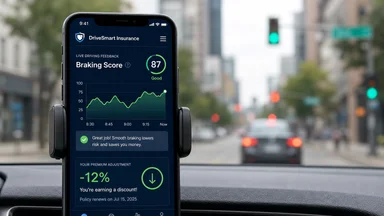
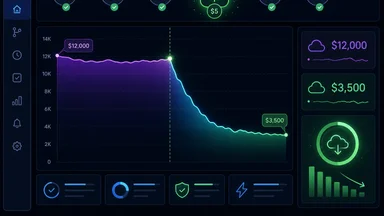
In early 2024, a relatively unknown insurtech called SafeDrive began offering a personal auto policy that rewrites its own price as the car moves. The product, approved by regulators in three states, uses smartphone accelerometer data to detect hard braking events and recalculates the premium in near real-time. Founder Jenna Kwan says the average premium dropped 12% over the first six months for enrolled drivers. But the real story is not the discount—it is how the premium dollar flows through a value chain that now includes a reinsurer with direct API access to braking data.
The Policy That Rewrites Every Second
Traditional auto insurance prices a policy at inception and adjusts it at renewal, sometimes with a mid-term change for a major violation. SafeDrive's policy does something different: it treats driving behavior as a continuous variable. Every hard brake—defined as a deceleration above a threshold detected by the phone's accelerometer—feeds into a live actuarial model that updates the remaining premium for that policy period.
The product is marketed as pay-how-you-drive, distinct from the pay-per-mile models that have been around for a decade. Kwan describes it as a shift from periodic to continuous underwriting. "We are not just rating the driver; we are rating the trip," she told an industry conference in late 2024. The policy's base rate is set at enrollment, but the effective premium adjusts upward or downward based on a rolling 30-day braking score.
Regulators in Texas, Arizona, and Ohio approved the dynamic rate structure after SafeDrive demonstrated that the model does not unfairly penalize drivers in heavy-traffic areas. The company uses contextual data—time of day, road type, speed limit—to distinguish between necessary braking and aggressive braking. A driver who brakes hard because a child runs into the street is not penalized; one who brakes hard because they were following too close is.
Early results, as reported in a 2025 AM Best analysis, show a loss ratio of roughly 58%, compared with an industry average near 70% for personal auto. That 12-point gap is the engine that funds the entire distribution and reinsurance structure.
Where the Premium Dollar Actually Goes
For a standard personal auto policy, roughly 65 to 75 cents of every premium dollar goes to claims and loss adjustment expenses. The rest covers acquisition costs, overhead, and profit. SafeDrive's lower loss ratio changes the allocation significantly. With a 58% loss ratio, the insurer has more room to pay distribution partners and cede premium to reinsurers while still maintaining a combined ratio under 100%.
SafeDrive does not hold a direct insurance license. It operates through a fronting carrier—a licensed insurer that issues the policy on paper and takes a small fee, typically 2–4% of premium, for bearing the regulatory risk. The fronting carrier cedes virtually all of the insurance risk to SafeDrive's captive reinsurer, which in turn cedes a 30% quota share to Munich Re, as disclosed in a 2025 reinsurance filing.
The managing general agent (MGA) structure is familiar in insurtech, but SafeDrive's version includes a twist: the ceding commission paid to the MGA (SafeDrive's distribution arm) is tied to the loss ratio. If the loss ratio stays below 60%, the commission rises; if it creeps above, the commission falls. This aligns the MGA's incentive with loss performance, a design that reinsurers have been pushing for years.
What is less visible is the fee that the rideshare platform collects. For policies distributed through the Lyft driver app, Lyft receives a per-mile commission on earned premium. The fee is small—some estimates put it near $0.01 per mile—but it scales with usage. For a driver who logs 2,000 miles a month, that adds up to roughly $20 in distribution cost, far below the $100–$200 typical of agent-issued policies.
Braking Data as a Reinsurance Signal
The most novel part of the SafeDrive structure is how braking data flows to the reinsurer. Munich Re does not receive quarterly loss reports; it receives daily braking scores for the entire book via a secure API. These scores are aggregated and anonymized at the device level, but they are granular enough to detect shifts in driving behavior across the portfolio.
A 2023 study by Zurich Insurance found that hard braking frequency correlates strongly with collision claims—drivers in the top quartile of braking events had a claim frequency roughly 40% higher than those in the bottom quartile. SafeDrive's data corroborates that finding, and Munich Re uses it to adjust the ceded premium on a monthly basis. If the fleet-wide braking score deteriorates, the reinsurer charges a higher rate for the quota share; if it improves, the rate drops.
Beyond the quota share, the treaty includes a parametric trigger: if the aggregate braking events across the entire book exceed a predefined threshold in any month, Munich Re pays a fixed sum to SafeDrive's captive, no claims adjustment needed. The trigger is based purely on telematics data, not on incurred losses. This reduces moral hazard because SafeDrive cannot inflate claim counts to trigger recovery, and it reduces friction because no adjuster needs to verify the event.
Parametric triggers are common in catastrophe bonds and weather derivatives, but they are rare in personal auto. SafeDrive's structure may be the first to use braking frequency as a parametric index. The reinsurer benefits from a transparent, objective signal that cannot be manipulated after the fact. SafeDrive benefits from faster recoveries—payments are triggered within days, not months.
The Embedded Distribution Play
SafeDrive's policy is not sold through agents or comparison websites. Since the third quarter of 2024, it has been embedded in the Lyft driver app. Coverage activates only when the driver is logged in and available for rides; it deactivates when the driver goes offline. This is a form of on-demand insurance, but the pricing adjusts during the session based on braking data from that trip.
For Lyft, the arrangement solves a persistent problem: many rideshare drivers carry personal auto policies that exclude commercial use, creating a coverage gap. SafeDrive's product fills that gap with a policy that is explicitly designed for the rideshare use case. Lyft does not underwrite the risk, but it collects a per-mile commission and gains a feature that may improve driver retention. As of early 2025, SafeDrive reported that roughly 82% of policyholders remained enrolled after six months, a retention rate that rivals traditional carriers.
The acquisition cost is under $20 per policy, compared with $100–$300 for a typical agent-sold policy. Most of that cost is digital marketing and in-app onboarding. There is no underwriting interview, no credit check, no vehicle inspection. The policy is issued in minutes, and the price is known only after the first few trips, once the braking data stabilizes.
Embedded distribution also means that SafeDrive collects data from the start. A traditional carrier might see a policyholder's driving record at application and then not again until renewal. SafeDrive sees every trip, every brake, every mile. That data density is what makes the real-time pricing model possible—and what makes the reinsurance structure viable.
What the Incumbents Are Doing Wrong
Progressive's Snapshot program, one of the oldest usage-based insurance products, still uses fixed-rate tiers that update at renewal. A driver who improves their behavior mid-policy will not see a discount until the next term. Allstate's Drivewise gives discounts for good driving but does not adjust the rate during the policy period. The industry norm is batch processing: collect data for six months, run a model, apply a discount at renewal.
SafeDrive's approach is fundamentally different because it treats underwriting as a continuous process, not a periodic one. The actuarial model updates every time a trip ends. The premium for the remaining days of the policy term is recalculated. This is not a technological leap—the sensors and computing power have been in smartphones for years—but it is an operational and regulatory leap.
Legacy carriers face several barriers to adopting this model. Their policy administration systems are built around fixed-term rating. Changing a premium mid-term requires a regulatory filing in most states, and most carriers file rates annually. Agent compensation structures also resist change: agents are paid a commission based on the premium at sale, not on a variable mid-term amount.
SafeDrive's advantage is that it started from scratch. It built its policy administration system around variable pricing from day one. It chose states with flex-rating laws that allow mid-term adjustments. And it bypassed agents entirely, so no compensation model stood in the way. The incumbents are not ignorant of the technology—many have telematics programs—but they are trapped by the infrastructure and distribution models they built over decades.
The Catch: Adverse Selection and Privacy Friction
For all its elegance, the SafeDrive model faces a fundamental challenge: only about 18% of eligible drivers opt in, according to a 2025 JD Power survey. The same survey found that 43% of non-participants cited privacy concerns. Drivers are uncomfortable sharing continuous location and acceleration data, even when the company promises anonymization at the device level.
Low opt-in rates create a selection bias. Early adopters tend to be safer drivers who expect a discount. Riskier drivers avoid the program, knowing that their braking data would raise their premium. This adverse selection could widen the loss ratio as the book expands—if SafeDrive eventually attracts a riskier pool, the 58% loss ratio may rise. The company has not publicly disclosed how it plans to address this, though Kwan has mentioned efforts to build trust through transparent data usage policies and third-party audits.
Privacy friction is not unique to SafeDrive. Every telematics program faces it. But SafeDrive's model depends on continuous data collection, not periodic snapshots. A driver who turns off the phone or disables the app cannot be rated accurately. The policy includes a provision that if data stops flowing for more than seven days, the premium reverts to a default rate that is higher than the average—a penalty that may push some drivers to opt out entirely.
There is also a regulatory risk. State insurance departments are watching how real-time pricing affects fairness. If the model systematically charges higher rates to drivers in urban areas with more stop-and-go traffic—even with contextual adjustments—it could face challenges under disparate impact theories. SafeDrive's approval in three states is a start, but national expansion will require navigating 50 different regulatory philosophies.
What This Means for Reinsurance Structures
SafeDrive is a small company—its premium volume in 2025 was likely under $50 million—but its reinsurance structure points to a larger trend. Quota share treaties with dynamic ceding commissions, where the commission rate floats with loss performance, are becoming more common. Reinsurers are demanding direct data access, not just aggregated reports, because they want to run their own models on the raw telematics data.
Parametric triggers based on driving behavior could become a standard feature in auto reinsurance treaties. They reduce the lag between loss occurrence and recovery, and they eliminate disputes over claim adjustment. For reinsurers, the appeal is transparency: a braking score is objective in a way that a claim file is not. For cedents, the appeal is speed: parametric payments can be received within days, improving cash flow and reducing the need for reserve financing.
Fronting carriers will need to build real-time data ingestion capabilities if they want to host insurtech programs like SafeDrive's. The traditional fronting model relies on monthly bordereaux reports; SafeDrive's fronting carrier receives daily data feeds and must be able to validate the premium calculations in near real-time. That requires investment in API infrastructure and data engineering that many fronting carriers have not yet made.
The mid-curve price adjustment—changing a policy's premium before its natural expiration—may become the norm within five years, at least for telematics-based products. If SafeDrive's loss ratio holds and its retention stays above 80%, the incumbents will have to respond. The question is whether they will build their own real-time systems or acquire the technology. Either way, the premium dollar is moving faster, and the data behind it is getting richer.
This article is for informational purposes only and does not constitute professional insurance or financial advice. Readers should consult qualified professionals for advice tailored to their specific circumstances.