A Single Rideshare Policy Priced Suburban Trips at Urban Rates for Six Months

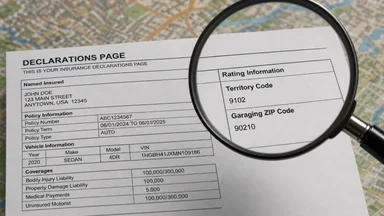
A rideshare driver living in unincorporated DuPage County, Illinois, about 30 miles west of the Chicago Loop, received a renewal quote for their personal auto policy with a commercial rideshare endorsement in November 2023. The premium had jumped roughly 30 percent from the prior term. There had been no accidents, no moving violations, and no change in the vehicle. The driver called the insurer—a regional carrier writing in five Midwestern states—and was told the rate was based on the garaging ZIP code. That code, 60187, matched their suburban address. But the rating tier assigned to that ZIP was an urban density band typically reserved for downtown Chicago neighborhoods. The policy had been priced that way for six months, across two policy periods: one beginning in June 2023 and another in December 2023. The driver had paid roughly $400 more than a correctly rated suburban policy would have cost.
This is not a story about fraud or a single bad agent. It is a story about how territory rating—one of the oldest and most stable pricing levers in auto insurance—can misfire when combined with newer products like rideshare endorsements and telematics scoring. The error was not the result of a conspiracy. It was the result of a rating engine applying an urban base rate to a suburban risk, with no mechanism to correct the mismatch until the policyholder complained.
How a Single Rating Variable Can Double a Premium
Territory rating is a core pricing lever in personal auto insurance. Insurers divide geographic areas into rating territories based on historical loss costs, population density, traffic patterns, and claims frequency. A driver garaging a vehicle in a dense urban core—say, the Loop in Chicago—pays a higher base rate than a driver in a suburban town like Naperville. The difference can be substantial: some estimates put the urban premium at 40 to 60 percent more than the suburban equivalent for identical coverage. In the case of this rideshare policy, the insurer used the garaging ZIP code to assign a territory code. But the ZIP code the driver provided—60187—was mapped to a territory that had been defined years earlier, when the area was still considered part of a broader urban zone. The insurer had not updated its territory boundaries to reflect suburban expansion. The driver's actual driving pattern was primarily suburban and exurban, with occasional trips into the city. But the rating engine treated every mile as though it were driven in the highest-density tier.
The rideshare endorsement added a second layer of complexity. Rideshare coverage is typically priced as a flat additive premium on top of the personal auto base rate. The additive premium is meant to cover the additional exposure during the period when the driver is logged into the app but has not yet accepted a passenger—the so-called Period 1 exposure. In this policy, the rideshare loading was moderate, but it was applied to an already inflated base rate. The result was a premium that reflected urban exposure for a suburban risk.
The six-month policy cycle hid the mismatch. At renewal, the insurer's system automatically recalculated the premium using the same territory code. Because there were no claims, the driver had no reason to question the rate. The declarations page showed the correct garaging ZIP code, but the territory code—a three-digit number printed in small type—was the one for the urban density band. Most policyholders would not know to compare the two.
The Rating Engine Behind the Mispricing
The insurer in this case used a telematics-based algorithm to score driving behavior. Telematics devices or smartphone apps track mileage, speed, braking, and time of day. The data is fed into a predictive model that assigns a risk score, which then modifies the base rate. In theory, telematics should make pricing more accurate by aligning premium with actual exposure. In practice, the algorithm is only as good as the inputs it receives at binding.
At policy inception in June 2023, the driver provided a garaging address and selected "commercial rideshare" as the primary use. The algorithm assigned a territory code based on the ZIP code of the garaging address. But the insurer's territory rating table had not been updated to reflect recent demographic shifts. The ZIP code 60187 fell into a territory that was originally drawn to encompass a mix of urban and suburban census tracts. The algorithm defaulted to the highest-density tier within that territory, rather than the median or mode.
The telematics data itself was not used to verify territory at the time of binding. The algorithm did not perform a per-trip GPS verification to see where the driver actually operated. It simply applied the rating tier associated with the garaging ZIP. For the first six months, the telematics data showed that the driver spent roughly 80 percent of miles in suburban or rural areas, with only 20 percent in the urban core. But that data was used only for the behavior score, not for territory reclassification.
The insurer's rate filing with the Illinois Department of Insurance included a matrix of territory codes and base rates. The filing had been approved in 2021. The territory definitions had not been challenged because the overall book of business appeared profitable. The mispricing of a single policy was invisible to the regulator, who reviews aggregate data, not individual policy pricing.
Why the Error Persisted for Six Months
The policy auto-renewed after the first six-month term. Under most state laws, insurers are not required to perform a mid-term review of rating variables unless the policyholder requests a change or a claim occurs. The driver had no claims, no traffic citations, and no changes to the vehicle. The insurer's system saw a stable risk and applied the renewal premium with the same territory code. The premium increase from the prior term was attributed to general rate level adjustments, which the driver accepted without question.
Claims-free periods can mask overcharges because there is no trigger for a manual review. When a policy is priced correctly, a claims-free period often leads to a discount or a steady premium. But when the base rate is already inflated, the absence of claims only reinforces the status quo. The driver assumed the premium was correct because the insurer had not flagged any issues and the agent had not questioned the territory code.
The insurer's internal audit processes typically focus on total premium and loss ratio for blocks of business, not on individual rate accuracy. The auditor reviewing the rideshare book would have seen that the average premium for this territory was within expected bounds. The single policy's overcharge was small relative to the book's total premium. It would take a targeted review of territory code assignments to catch the anomaly.
State rate filings allow insurers to assign territory codes based on garaging address, but they do not require that the code match the actual driving pattern. The insurer had complied with the filing by using the garaging ZIP as the basis for the territory assignment. The fact that the ZIP code mapped to an outdated territory was not a violation of the filing—it was a flaw in the underlying rating table.
What a Correctly Priced Policy Looks Like
If the same risk had been rated correctly, the base rate would have been the suburban territory tier, which is roughly 40 percent lower than the urban tier. The rideshare endorsement would have added a moderate loading, typically in the range of 15 to 25 percent of the base premium. The annual premium for a single vehicle with full coverage and a rideshare endorsement in a suburban territory might range from $1,200 to $1,500, depending on the driver's age and record. The driver in this case was paying roughly $1,800.
A correctly priced policy would also reflect the driver's actual mileage patterns. The telematics data showed that the driver logged roughly 12,000 miles annually, with about 2,400 miles in urban areas. A per-mile pricing model would have charged a lower rate for suburban miles and a higher rate for urban miles, aligning the premium more closely with risk. Some insurers offer pay-per-mile policies that use GPS to track location and adjust rates trip by trip. Those products are still niche but growing.
The driver also qualified for a telematics discount based on safe driving behavior—smooth braking, moderate speeds, and consistent daytime driving. In a correctly rated policy, that discount would have been applied to the suburban base rate, resulting in a further reduction. Instead, the discount was applied to the inflated urban base rate, muting its effect. The driver saw a discount on the declarations page but did not realize the base was wrong.
Had the insurer used a territory verification step at renewal—comparing the telematics-derived driving locations to the rated territory—the mismatch would have been flagged. But the insurer's system did not have that check. The error was only discovered when the driver called to complain about the renewal increase and asked for a breakdown of the rating factors.
Regulatory Gaps That Enable Silent Overcharges
State insurance departments review rate filings for adequacy and fairness, but the review is typically at the aggregate level. Regulators check that the overall rate level is not excessive, inadequate, or unfairly discriminatory. They do not audit individual policy pricing unless a complaint is filed. In 2023, the National Association of Insurance Commissioners issued a white paper on territory rating, noting that many states do not require insurers to update territory boundaries on a regular cycle. The paper recommended that insurers review territories at least every three years, but the recommendation is not binding.
Rideshare classification itself lacks granularity. Most insurers offer a single rideshare endorsement that applies a flat additive premium, regardless of whether the driver operates primarily in urban or suburban areas. The additive premium is based on the insurer's average loss cost for rideshare exposure across the entire book. This means that a driver who only takes suburban trips subsidizes a driver who takes urban trips. Some insurers have begun to offer tiered rideshare endorsements based on expected trip density, but the practice is not widespread.
Telematics data could close the gap, but insurers are cautious about using location data for rating due to privacy concerns and regulatory scrutiny. Some states restrict the use of GPS data for rating purposes. The balance between accurate pricing and consumer privacy is an ongoing debate. Insurers argue that they need the data to prevent adverse selection; consumer advocates argue that location tracking can lead to discriminatory pricing.
The result is a regulatory environment where silent overcharges can persist indefinitely. The driver in this case was able to get a refund for the prior six months after filing a complaint with the Illinois Department of Insurance. But the average policyholder may not know that a territory mismatch is a valid basis for a refund request. The process requires the policyholder to identify the error, gather evidence, and navigate the complaint system.
How a Policyholder Can Catch This Error
The first step is to compare the garaging ZIP code on the declarations page with the territory code, if shown. Many insurers print a territory code as a three- or four-digit number. Policyholders can ask their agent or broker to explain what territory that code corresponds to. If the territory code appears to be for a higher-density area than the garaging address suggests, it is worth investigating.
The second step is to request the rating tier from the agent. Agents have access to the insurer's rating system and can see the base rate and all modifiers. A simple question—"What territory is my policy rated in?"—can prompt a review. Some agents may not know the territory definitions offhand, but they can look them up or call the insurer's underwriting department.
Policyholders with telematics apps can review their trip classifications. Many telematics apps show a map of trips and may categorize them by road type or zone. If the app shows that the majority of trips are in suburban or rural areas but the premium seems high, the territory assignment may be off. The policyholder can then compare the app data to the rating factors on the declarations page.
Finally, if a discrepancy is found, the policyholder should file a complaint with the state insurance department. Most departments have an online complaint portal. The complaint should include the policy number, the garaging address, the territory code, and any telematics data that shows actual driving locations. The department will typically ask the insurer to respond and may order a refund if the error is confirmed.
Beyond these steps, policyholders can also look for signs of mispricing in renewal notices. A sudden premium increase with no change in risk factors—no accidents, no tickets, no new drivers—warrants a closer look. Comparing the renewal premium to the prior term's premium on a line-by-line basis can reveal whether the base rate or territory code changed. Some insurers provide a breakdown of rating factors on the renewal notice; if not, the policyholder can request one.
Another tactic is to obtain quotes from other insurers for the same coverage. If a competitor's quote is significantly lower, it may indicate that the current insurer's territory assignment is off. However, differences in coverage limits and deductibles must be accounted for. A side-by-side comparison of the declarations pages can help isolate the territory effect.
Policyholders should also be aware that territory codes can change over time as insurers update their rating territories. A code that was correct at policy inception may become outdated if the insurer revises its territory definitions. Reviewing the territory code at each renewal and asking the agent whether it still reflects the current rating plan can prevent silent overcharges.
The rideshare driver in DuPage County ultimately received a refund after filing a complaint. But the experience highlights a broader issue: the insurance industry's reliance on static rating variables in a dynamic environment. As telematics data becomes more prevalent, insurers have the opportunity to move toward real-time pricing that adjusts premium based on actual exposure. Until then, policyholders must remain vigilant.