An MGA’s Single Homeowners Parametric Paid Before the Adjuster Inspected

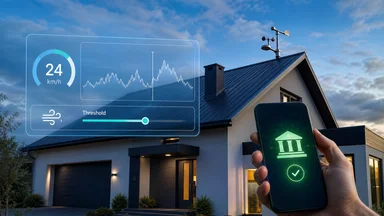
A wind-speed threshold was crossed at 2:14 a.m. on a Tuesday in June. By 8 a.m., the policyholder's bank account showed a credit for the full parametric limit. No adjuster had inspected the roof. No depreciation schedule had been calculated. No claims adjuster had even opened a file. The policy was written by a managing general agent (MGA) that had never met the insured, and the risk had been ceded to an insurance-linked securities (ILS) fund before the storm had passed. This is the reality of parametric homeowners insurance in a market that has long promised disruption but is only now delivering it at scale.
The Parametric Trigger That Outran the Claim Form
The policy was a simple parametric contract: if a certified wind-speed reading at a specified weather station exceeded 110 miles per hour, the policyholder would receive a fixed payout of $50,000. No proof of loss. No roof inspection. No negotiation. The trigger was objective, verifiable, and public. At 2:14 a.m., the anemometer at the nearest National Weather Service station recorded 112 mph. The MGA's system automatically pulled the data, verified the threshold, and initiated payment.
By 8 a.m., the funds had moved from a collateral trust account to the policyholder's bank. The entire process took less than six hours. Compare that to a traditional homeowners claim, where the average time from first notice of loss to payment is roughly 30 to 45 days, according to industry surveys. The parametric policy eliminated the bottleneck entirely: no human review, no dispute over causation, no salvage or subrogation.
The MGA that wrote the policy had designed the trigger after analyzing 20 years of hurricane data for that coastal county. The 110-mph threshold was set to correlate with a high probability of structural damage, but it was not a perfect proxy. That is the trade-off at the heart of parametric insurance: speed and certainty in exchange for basis risk. The policyholder could receive a payout even if the house suffered only minor damage, or could suffer catastrophic damage without a payout if the wind speed at the official station fell below the threshold.
In this case, the payout matched the loss reasonably well. An independent adjuster later estimated actual damage at $48,000. The parametric payment covered it, plus a small buffer. But the adjuster's report was irrelevant to the payment. The MGA had already closed the file.
How an MGA Cedes Risk Before the Sun Rises
The MGA's business model depends on transferring risk quickly and efficiently. In this transaction, the MGA retained a first-loss layer of $10,000 per policy, meaning it would absorb losses up to that amount from its own capital. The next $40,000 of parametric exposure was ceded to a special-purpose insurer that issued a catastrophe bond. The cat bond documentation specified wind-speed bands: payouts at 110 mph, 120 mph, and 130 mph, with corresponding percentages of the bond principal at risk.
The reinsurance tower was triggered by the index reading, not by any loss adjustment. Within hours of the wind-speed report, the MGA's system submitted a parametric trigger notification to the cat bond trustee. The trustee verified the index data against an independent source and released funds from a collateral account held at a major custodian bank. The reinsurer's capital was released the same day as the event.
No claims reserve was needed. Parametric payouts are formulaic and predetermined. The MGA did not have to set aside reserves for expected future payments because the liability was capped and defined. The reinsurer, likewise, did not need to establish a loss reserve; the cat bond's collateral was already posted and earmarked for parametric triggers. This speed of capital release is one of the most attractive features for reinsurers, who can recycle capital quickly after a loss event.
The entire structure relied on the accuracy and independence of the index data. The MGA contracted with a third-party data provider that certified the wind-speed readings. The cat bond documentation required that the data come from an agreed-upon source, with no room for dispute. If the anemometer malfunctioned, the policy would not trigger, and the policyholder would bear the basis risk. That is a known limitation, and it is disclosed prominently in the policy language.
The Premium Flow That Skips the Carrier
The premium for this parametric homeowners policy was $1,200 per year, paid by the policyholder directly to the MGA via an embedded platform on a real estate closing website. The MGA deducted a commission of 25%—$300—for origination, underwriting, and technology costs. The remaining $900 was ceded to a fronting carrier, a licensed insurer that provided the policy paper and regulatory compliance.
The fronting carrier, in turn, passed nearly 100% of the premium to a retrocessionaire—in this case, the special-purpose insurer that issued the cat bond. The retrocessionaire retained a small fee, roughly 5% of the premium, for managing the collateral and reporting to investors. The bulk of the premium flowed to the ILS fund that held the cat bond, compensating investors for bearing the parametric tail risk.
Premium dollars never sat in a traditional surplus account. They moved from the policyholder to the MGA to the fronting carrier to the retrocessionaire within a matter of days. The fronting carrier's balance sheet showed the premium as a ceded liability, not as earned premium. The carrier's capital was not deployed, and its risk was minimal—essentially the credit risk of the retrocessionaire.
This structure is common in the MGA space, where the managing agent acts as the primary interface with the policyholder and the distribution channel, while the carrier provides the license and the reinsurer provides the capacity. The efficiency gains are real, but they come with a layer of complexity that regulators are still grappling with. As of late 2024, some state insurance departments had begun requiring MGAs to disclose their compensation structures and the financial strength of their reinsurers, particularly in catastrophe-prone states like Florida and California.
Where the Hype Meets the Balance Sheet
Parametric homeowners insurance remains a small slice of the U.S. property market. As of early 2026, parametric policies accounted for less than 2% of all homeowners premiums written, according to estimates from Deloitte's Center for Financial Services. The growth rate, however, is notable. Catastrophe bond issuance reached roughly $15 billion in new volume in 2025, up about 15% from the prior year, according to data from Artemis.bm. A significant portion of that growth came from parametric structures tied to property risk.
The profitability of an MGA writing parametric homeowners depends on accurate trigger calibration. If the trigger is set too low, the MGA faces frequent payouts that erode its first-loss layer. If the trigger is set too high, the policy may never pay out, leading to customer dissatisfaction and regulatory scrutiny. The MGA in this case had calibrated its trigger using historical loss data from the county, but basis risk remains a persistent challenge.
Regulators in Florida and California have scrutinized parametric disclosures, particularly around basis risk. In Florida, the Office of Insurance Regulation issued a bulletin in 2025 requiring parametric insurers to provide a clear explanation of how the trigger correlates with actual loss, and to offer a right of rescission if the policyholder does not understand the product. California's Department of Insurance followed with similar guidance, focused on the use of parametric triggers in wildfire coverage.
The market's growth is real, but it is not a revolution. Parametric policies are most viable for specific, well-defined perils—wind, earthquake, flood—where index data is reliable and historical loss correlations are strong. For all-peril homeowners coverage, the parametric model remains a complement to, not a replacement for, traditional indemnity insurance.
Basis Risk in Practice: A Case Study
Consider a policyholder in a coastal county who purchased a parametric wind policy with a trigger of 110 mph at a designated weather station 15 miles inland. During a hurricane, the station recorded 108 mph, so no payout was made. However, the policyholder's property experienced sustained winds of 115 mph based on a local anemometer, causing $30,000 in roof damage. The parametric policy did not pay because the official index did not cross the threshold. This is a classic basis risk scenario: the index failed to capture the loss at the specific location.
In response, some MGAs now offer multi-station triggers or grid-based wind-speed models that interpolate data from multiple stations. For example, a parametric policy might use a weighted average of readings from three surrounding stations, reducing the chance of a mismatch. Other MGAs have introduced "conditional" parametric policies that pay a partial amount if the wind speed falls within a buffer zone below the full trigger. These innovations aim to close the gap between index and actual loss, but they add complexity and cost.
Another approach is layering: the policyholder buys a parametric policy for immediate liquidity and a traditional indemnity policy for full replacement. In the case above, the indemnity policy would cover the $30,000 damage after a standard adjustment process, but the parametric policy would not have provided the fast cash that could have been used for emergency repairs. To mitigate this, some insurers now offer hybrid products that combine a parametric trigger with a small indemnity component, allowing for both speed and accuracy.
Basis risk also affects investor appetite. ILS funds that hold parametric cat bonds rely on the index to correlate with industry losses. A 2024 event where a parametric bond triggered fully on a storm that caused minimal damage led to a temporary repricing of such bonds, with spreads widening by roughly 50 basis points. Since then, some funds have demanded more rigorous back-testing and correlation analysis before investing.
The Adjuster's Role in a Parametric World
For the parametric claim described here, no adjuster was involved. The MGA's system handled the trigger verification and payment automatically. The traditional adjuster's role—inspecting the property, estimating damage, negotiating settlement—was entirely bypassed. That raises a question: what happens to the adjuster's job as parametric insurance grows?
The answer is not that adjusters disappear, but that their work shifts. In a parametric world, adjusters spend less time on simple, high-frequency claims and more time on complex, low-frequency events where basis risk is disputed. For example, if a policyholder's house suffers damage but the parametric trigger does not activate—perhaps because the wind speed at the official station was lower than at the property—the adjuster may be called in to verify the actual loss and negotiate a separate indemnity claim if the policyholder has layered coverage.
MGAs that write parametric policies often hire third-party modelers to audit the index data. These modelers, often meteorologists or statisticians, verify that the wind-speed readings are accurate and that the station is representative of the policyholder's location. This is a specialized skill that differs from traditional claims adjusting. Some carriers have begun retraining their claims staff to handle index verification and basis-risk analysis, while outsourcing the routine parametric payouts to automated systems.
Labor savings on parametric policies are estimated at 30–50% compared to traditional claims, according to a 2025 study by McKinsey & Company. The savings come from eliminating field inspections, appraisal processes, and litigation over coverage disputes. But those savings are offset by the cost of data subscriptions, model validation, and collateral management. For the MGA, the net effect is a lower expense ratio, but with a different cost structure that requires upfront investment in technology and data infrastructure.
What the Reinsurance Recovery Reveals
In a traditional reinsurance program, the primary carrier submits a loss run, provides proof of damage, and negotiates the recovery. The process can take months. In the parametric case, the reinsurer paid on the index without any loss run or proof of damage. The recovery time dropped from months to days.
The collateral trust structure allowed same-day settlement. The cat bond trustee held cash or high-quality securities in a segregated account. When the trigger was verified, the trustee released the funds to the MGA, which then paid the policyholder. The reinsurer's exposure was capped at the parametric limit, with no possibility of adverse development. There are no loss reserves to strengthen, no IBNR to estimate, no subrogation to pursue.
The retrocession market's appetite for parametric risk has grown steadily. ILS funds have increased their allocations to parametric cat bonds, attracted by the transparency and short tail. A 2026 survey by the ILS advisory firm Twelve Capital found that roughly 40% of institutional investors in catastrophe bonds now include parametric structures in their portfolios, up from 25% three years earlier. The reason is simple: parametric bonds offer a defined risk profile with no moral hazard and no claims adjustment friction.
But the market's growth is not without limits. Parametric bonds require accurate, independent data sources, and they are vulnerable to basis risk that can sour investor returns if the index fails to correlate with actual losses. In 2024, a parametric cat bond tied to hurricane risk in the Gulf Coast triggered a full payout after a storm that caused only minor damage, leaving investors with a total loss on their principal. That event caused a brief repricing of parametric bonds, with spreads widening by roughly 50 basis points before stabilizing.
How Risk Managers Evaluate Parametric Coverage
Risk managers evaluating parametric coverage typically consider several factors. First, they examine whether the parametric trigger correlates with actual loss history for the specific property. Correlation coefficients above 0.8 are generally considered acceptable, and the MGA should provide historical back-testing data. Second, they assess the basis-risk band—the buffer between the trigger threshold and the level at which meaningful damage is expected. A 20-mph wind-speed buffer, for example, means the policy may not pay until winds exceed 110 mph, but structural damage may begin at 90 mph.
Third, they review who holds the collateral and its credit quality. In the case described here, the collateral was held by a major custodian bank in U.S. Treasury securities, with a credit rating of AAA. That is a strong position. Some MGAs, however, use lower-rated collateral or hold the collateral on their own balance sheet, which introduces credit risk. Additionally, they compare the MGA's commission to a standard carrier's expense load and consider whether the policyholder can layer parametric coverage on top of a traditional indemnity policy. Layering is common: the parametric policy provides immediate liquidity for urgent needs—hotel stays, temporary repairs—while the indemnity policy covers the full replacement cost after a traditional adjustment process. That combination can reduce the basis risk problem while preserving the speed benefit.
The parametric model is not a panacea. It works best for well-defined perils with reliable index data, and it requires careful disclosure and customer education. But for the policyholder who received $50,000 before breakfast, it was a lifeline. The adjuster never inspected, and the carrier never touched the file. The MGA, the cat bond, and the ILS fund did what they were designed to do: transfer risk at the speed of data.
This article is for informational purposes only and does not constitute professional insurance, legal, or financial advice. Coverage decisions should be made in consultation with a qualified advisor. No specific policy, MGA, or transaction is endorsed or criticized.